All articles.
Infrastructure opinions, field notes, and honest postmortems.
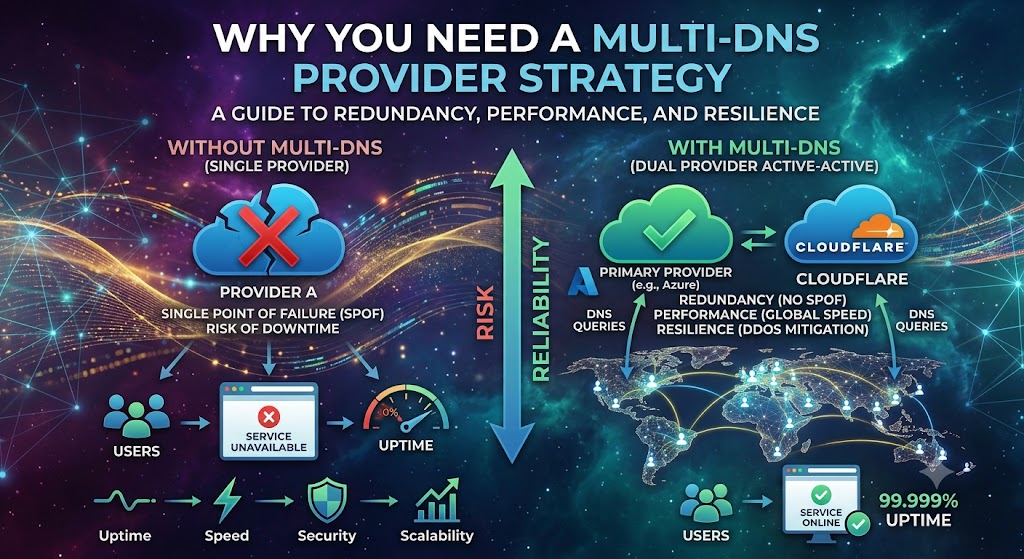
Why You Need a Multi-DNS Provider Strategy (Lessons From the 2025 AWS and Cloudflare Outages)
DNS is the quiet single point of failure that most of the internet still bets everything on. Two 2025 outages proved the cost: on October 20 a DNS fault inside AWS us-east-1 cascaded across the internet for about 15 hours, and on November 18 Cloudflare, a provider that runs DNS for millions of domains, went dark for roughly six hours. Neither shared a cause, but both teach the same lesson: if every name your service depends on resolves through one provider, that provider is your outage.
Read article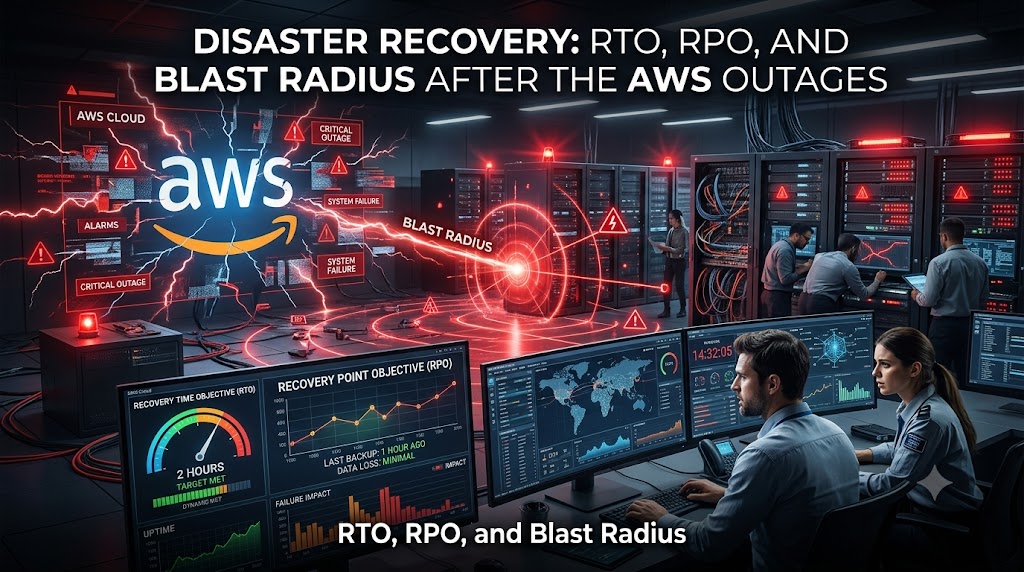
Disaster Recovery: RTO, RPO, and Blast Radius after the AWS Outages
For an SRE, disaster recovery is not a binder you open after everything is on fire. It is a set of measured objectives (SLOs), a defined error budget, and rehearsed, automated failover whose blast radius you have already mapped. Two outages between late 2025 and early 2026 prove why: one a software control-plane cascade, the other a physical loss of data centers, and both defeating the same assumption that a single cloud region is a safe place to keep all your eggs.
Read article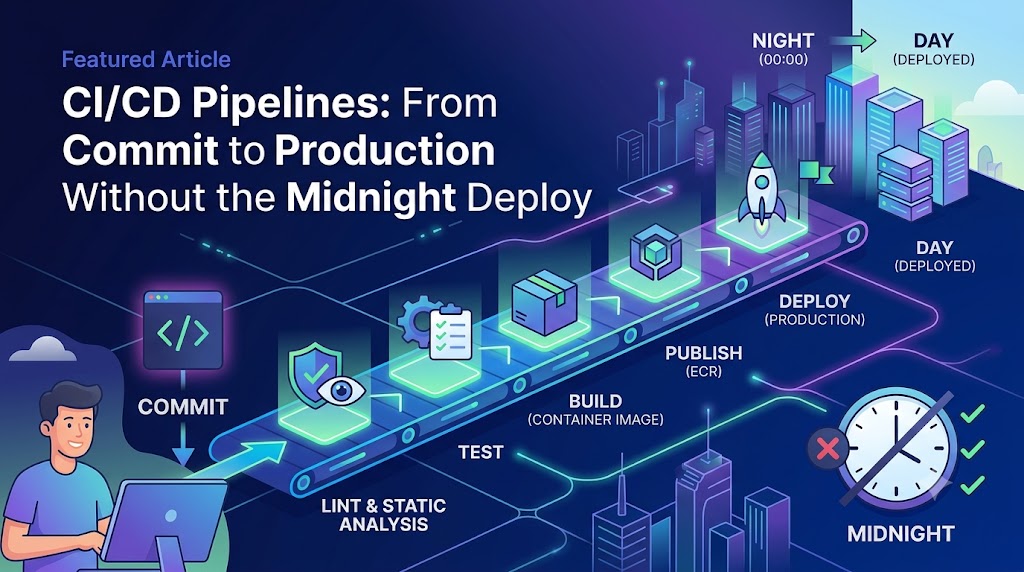
CI/CD Pipelines: From Commit to Production Without the Midnight Deploy
CI/CD pipelines automate the path from a code commit to a running release. Here's what continuous integration and delivery actually mean, the gates a real pipeline runs, lint, test, build, publish, deploy and a walkthrough of the exact GitHub Actions → ECR → ArgoCD flow that ships this site, plus how to start small without over-building it.
Read article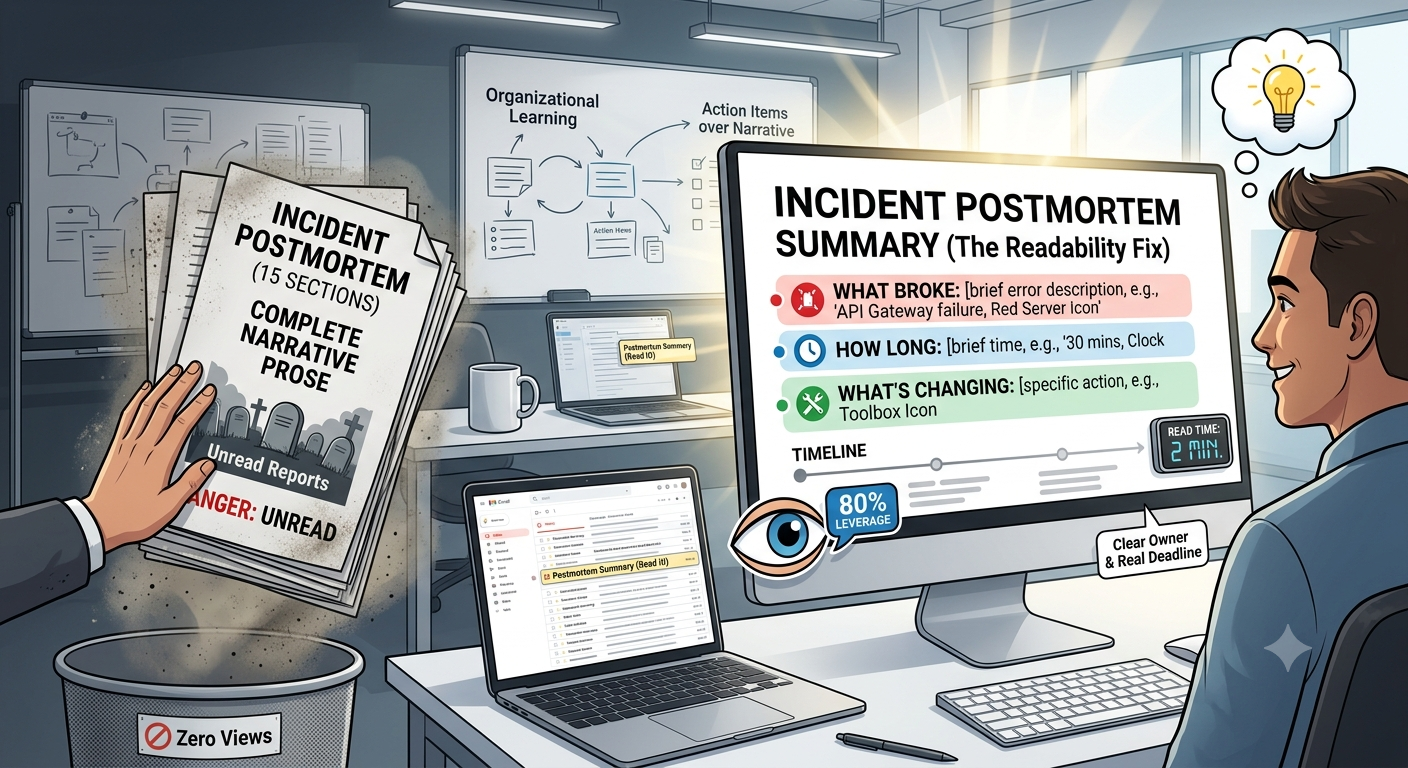
Incident Postmortems That Don't Get Read (And How to Fix That)
Most postmortem documents are written once and read zero times. The problem isn't the process. It's the format. A postmortem template with fifteen sections optimizes for completeness, not for being read, and if the goal is organizational learning, the document has to compete with everything else in someone's inbox. It usually loses.
Read article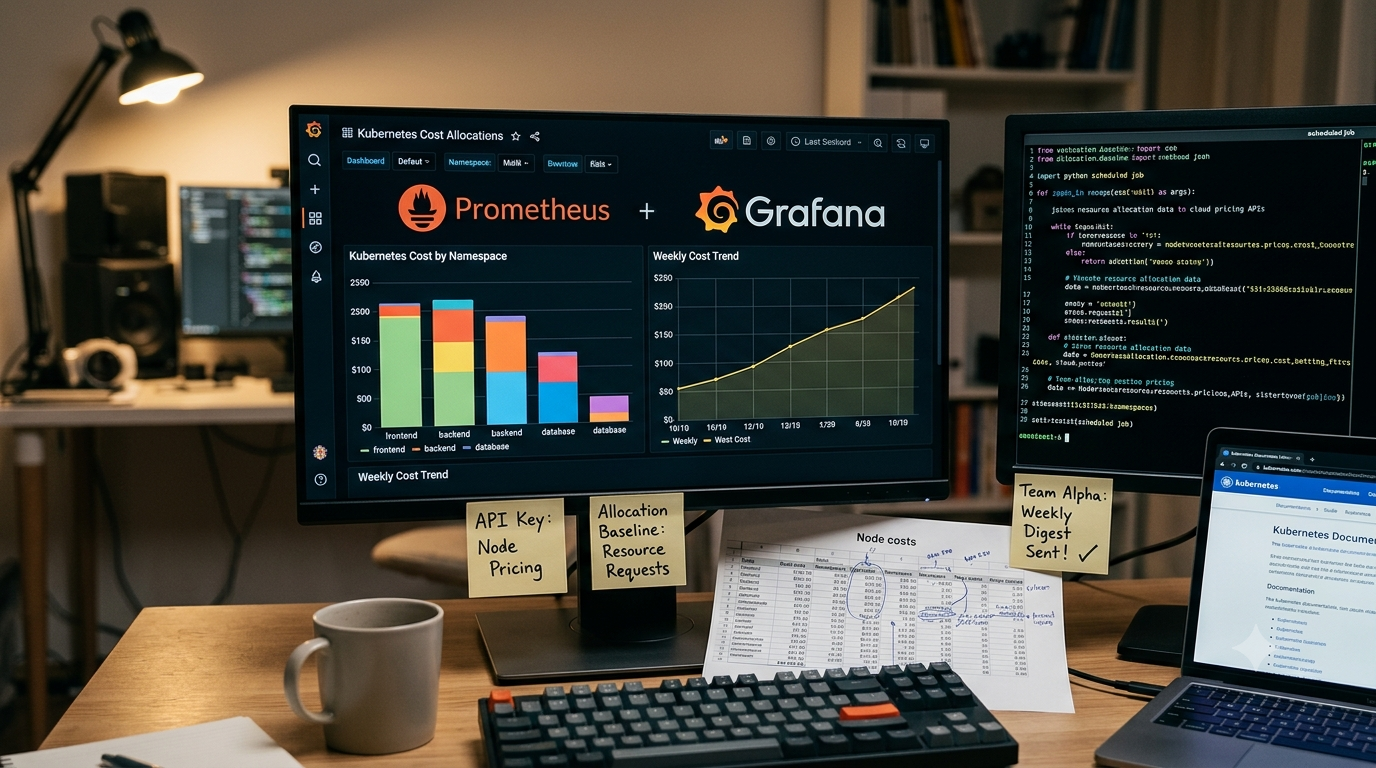
Kubernetes Cost Visibility Without a Vendor Tool
You don't need a $30k/year platform to know which namespace is burning your compute budget. Here's a scrappy, open-source path to the same answer.
Read article